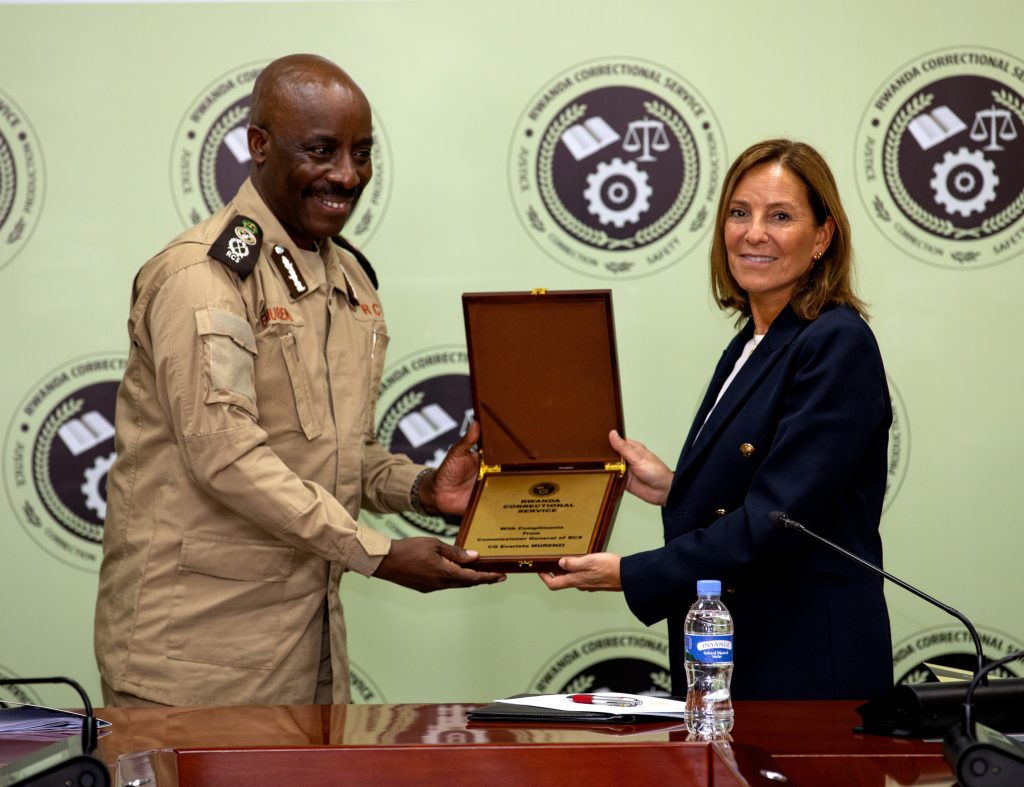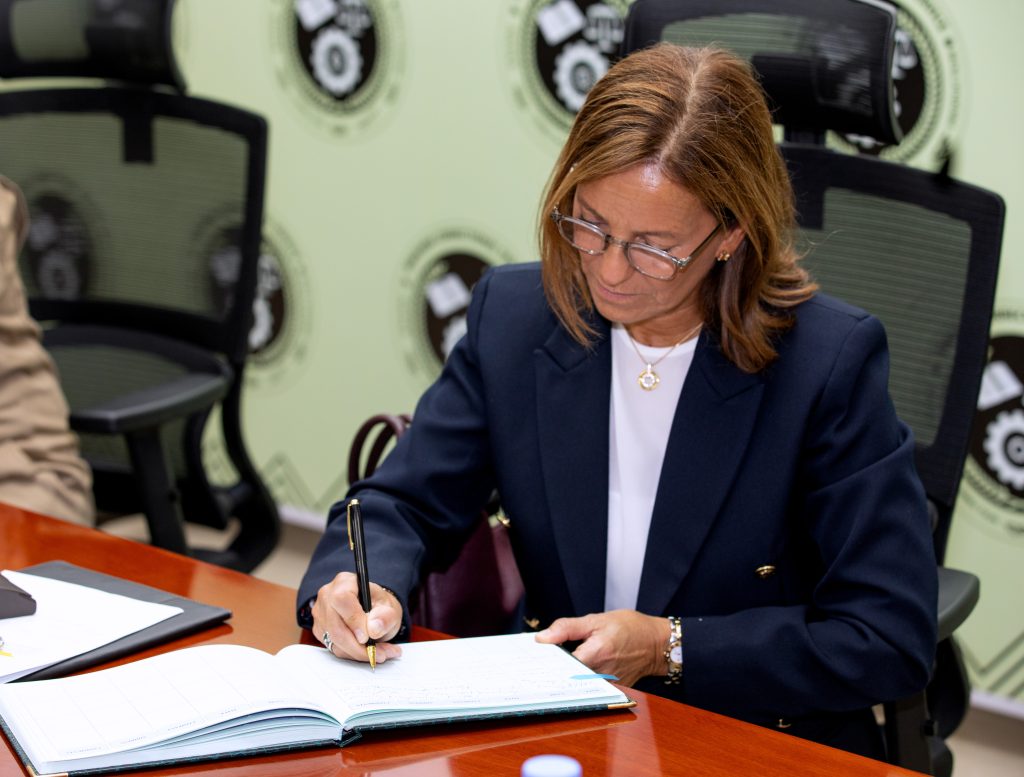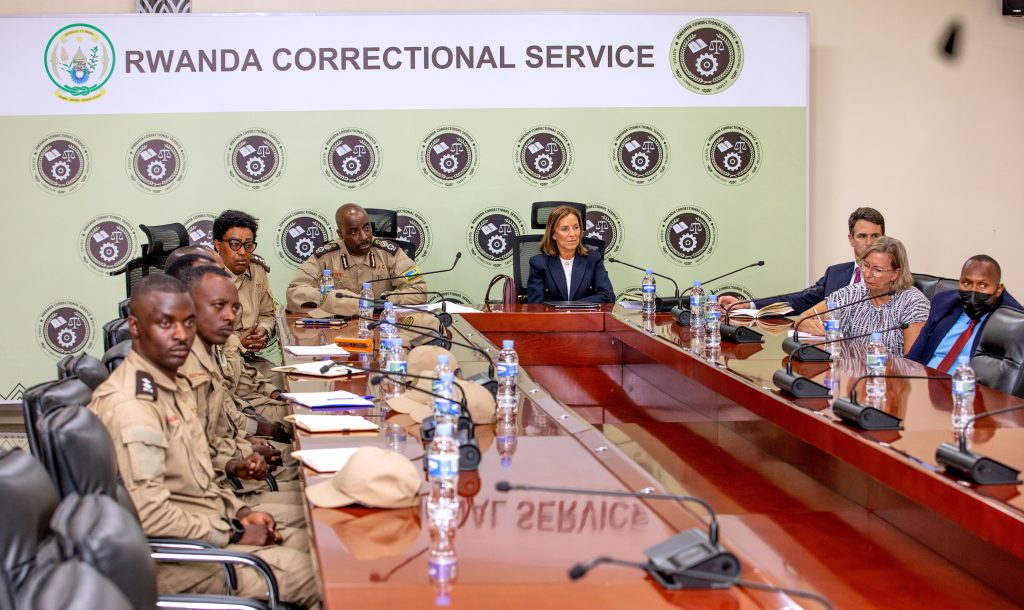
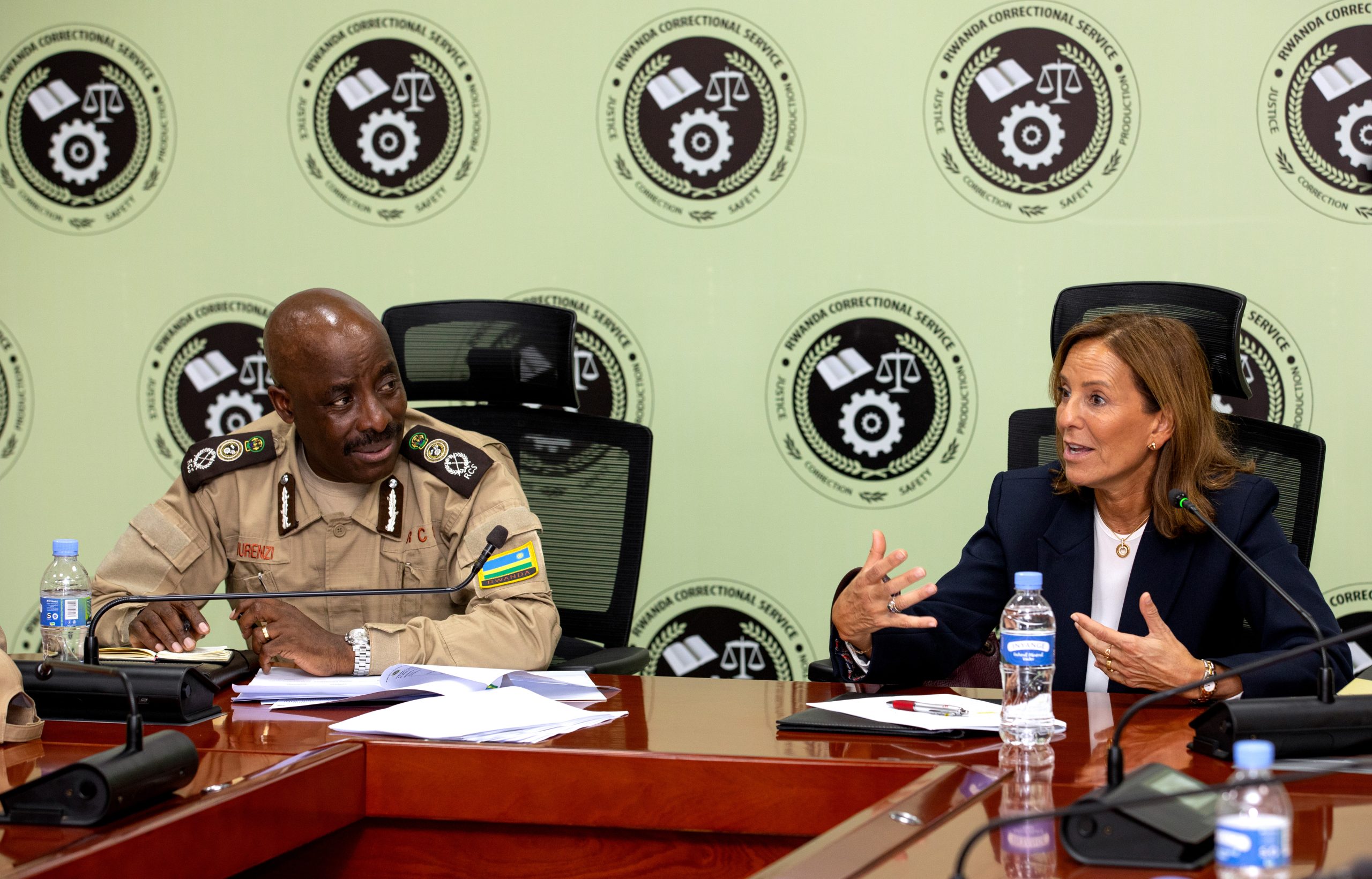
The discussions between the two leaders focused primarily on the welfare of inmates, particularly foreign prisoners serving the remainder of their sentences in Rwanda, as well as on rehabilitation strategies aimed at preparing them for reintegration into society.
These programs include vocational and technical training in fields such as tailoring, carpentry, agriculture and livestock farming, mechanics, and handicrafts, all of which equip inmates with practical skills to support their social and economic reintegration.
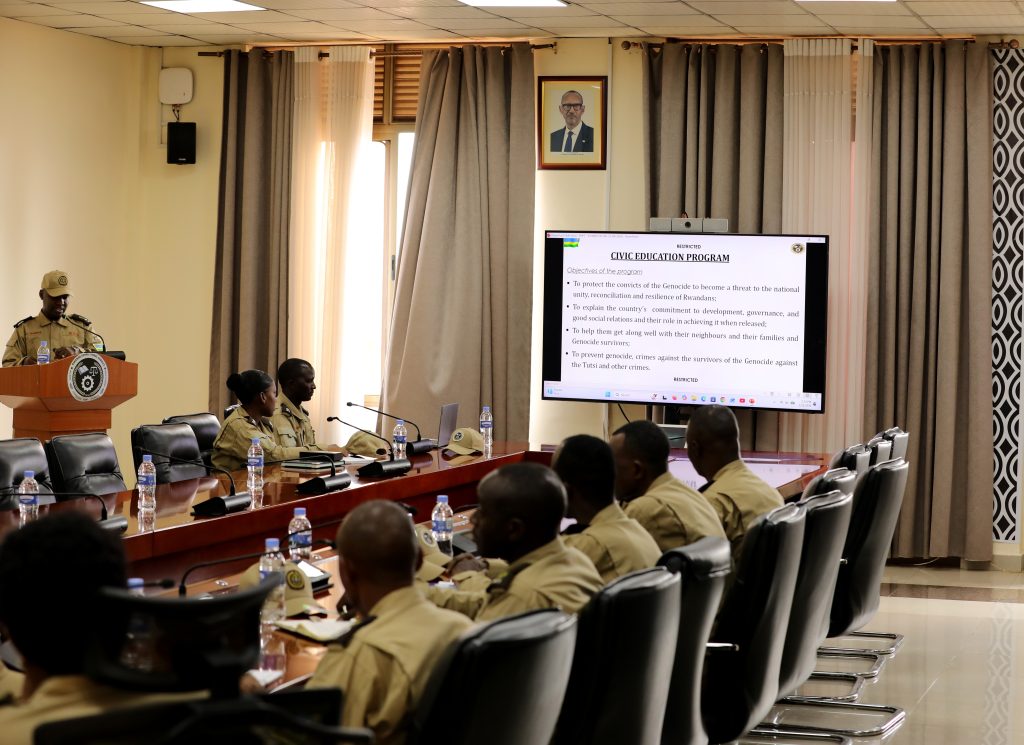
In addition, inmates benefit from various sporting activities that promote physical well-being and positive behavior, civic education programs that instill values of integrity, unity, and reconciliation, as well as basic literacy and numeracy courses for those who did not previously have access to formal education.
CG Murenzi emphasized that the Rwanda Correctional Service continues to implement international standards governing correctional facilities across the country. The President of the IRMCT commended the progress achieved and underscored the importance of continued cooperation in advancing justice and the protection of human rights.
The IRMCT is a United Nations judicial body established to complete the remaining functions of international criminal tribunals that prosecuted serious crimes, including genocide and crimes against humanity, notably the International Criminal Tribunal for Rwanda (ICTR) and the International Criminal Tribunal for the former Yugoslavia (ICTY). The Mechanism oversees the enforcement of sentences handed down by these tribunals and monitors compliance with international standards by States that host convicted persons.